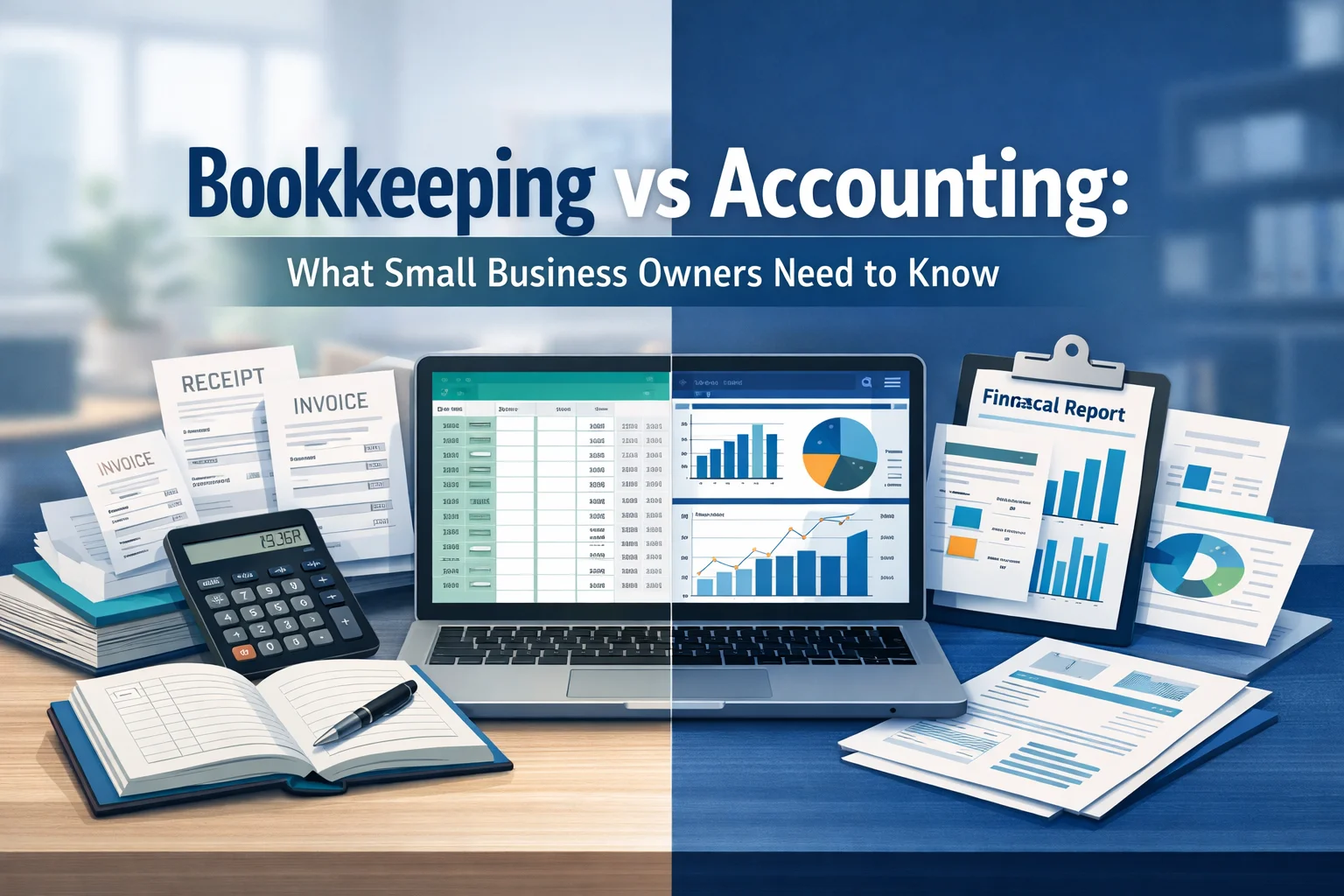
Bookkeeping vs Accounting: What Small Business Owners Need to Know
Running a small business requires more than selling products or providing services—it requires a clear understanding of your finances. Two terms that frequently appear in business finance are bookkeeping and accounting. Many business owners use these terms interchangeably, but they are not the same.
Understanding the difference between bookkeeping and accounting is essential for managing your company’s finances, staying compliant with tax regulations, and making informed decisions about growth. In this article, we will explore what bookkeeping and accounting mean, how they differ, and why both are critical for small business success.
What Is Bookkeeping?
Bookkeeping is the process of recording and organizing a business’s financial transactions. It is the foundation of the entire financial system of a company.
Every time money enters or leaves your business—whether through sales, expenses, payroll, or payments—it must be recorded accurately. Bookkeeping ensures that all financial transactions are documented and categorized correctly.
Key Bookkeeping Tasks
A bookkeeper typically handles the following responsibilities:
- Recording daily financial transactions (sales, purchases, payments)
- Managing invoices and receipts
- Tracking accounts payable and accounts receivable
- Reconciling bank and credit card statements
- Maintaining the general ledger
- Organizing financial documents
Bookkeeping focuses primarily on accuracy and consistency. The goal is to ensure that every financial transaction is properly recorded so that the business has a reliable financial record.
Example of Bookkeeping
Imagine you run a small online store:
- A customer buys a product for $150
- You pay $40 for shipping supplies
- You pay $200 for advertising
A bookkeeper records each of these transactions in the financial records. This information becomes the raw data used for financial analysis later.
What Is Accounting?
Accounting goes a step further than bookkeeping. While bookkeeping records financial transactions, accounting analyzes, interprets, and reports that data to help business owners make strategic decisions.
Accountants use bookkeeping data to prepare financial reports, evaluate financial performance, and ensure compliance with tax laws and financial regulations.
Key Accounting Tasks
Accountants typically handle tasks such as:
- Preparing financial statements (profit and loss, balance sheet, cash flow)
- Analyzing financial performance
- Budgeting and forecasting
- Tax planning and preparation
- Financial compliance and reporting
- Providing financial advice to business owners
Accounting transforms raw financial data into meaningful insights that guide business strategy.
Example of Accounting
Using the previous example of the online store, an accountant might:
- Analyze monthly sales trends
- Determine profit margins
- Identify unnecessary expenses
- Recommend strategies to increase profitability
In simple terms, bookkeeping answers “What happened financially?”, while accounting answers “What does it mean for the business?”
Key Differences Between Bookkeeping and Accounting
Although bookkeeping and accounting work together, they serve different purposes within a business.
| Aspect | Bookkeeping | Accounting |
|---|---|---|
| Main Focus | Recording financial transactions | Analyzing and interpreting financial data |
| Level of Work | Administrative and transactional | Analytical and strategic |
| Frequency | Daily or weekly | Monthly, quarterly, or annually |
| Responsibilities | Data entry, reconciliation, record keeping | Financial analysis, tax preparation, reporting |
| Skill Level | Requires organization and accuracy | Requires financial expertise and training |
| Outcome | Organized financial records | Business insights and financial strategy |
Bookkeeping is the first step in the accounting cycle, while accounting uses the collected data to produce reports and financial insights.
Why Small Business Owners Need Both
Many small businesses assume they only need bookkeeping, especially in the early stages. However, both bookkeeping and accounting are essential for maintaining financial health.
1. Accurate Financial Records
Without proper bookkeeping, your financial data may be incomplete or incorrect. Poor records can lead to incorrect financial reports, tax errors, and compliance problems.
Accurate bookkeeping ensures that accountants have reliable data to work with.
2. Better Financial Decision-Making
Accounting helps business owners understand:
- Whether their business is profitable
- Where money is being spent
- How cash flow is changing
- Whether expansion is financially possible
This information is critical when making decisions about hiring employees, investing in marketing, or expanding operations.
3. Tax Compliance
Taxes are one of the most complex aspects of running a business. Accountants ensure that your company complies with tax regulations and files accurate returns.
Good bookkeeping simplifies the tax preparation process by keeping financial records organized.
4. Financial Transparency
Clear financial records provide transparency for:
- Investors
- Lenders
- Business partners
- Government authorities
Proper bookkeeping and accounting make it easier to secure funding and maintain trust with stakeholders.
Do Small Businesses Need a Bookkeeper or an Accountant?
The answer depends on the size and complexity of the business.
When You Need a Bookkeeper
Small businesses usually need a bookkeeper when they:
- Have daily financial transactions
- Need help managing receipts and invoices
- Want accurate records for tax purposes
- Need organized financial data
Bookkeepers focus on maintaining accurate records and keeping financial data up to date.
When You Need an Accountant
You may need an accountant when your business requires:
- Financial analysis
- Tax planning
- Budgeting and forecasting
- Financial strategy
- Regulatory compliance
Accountants help businesses understand financial performance and plan for future growth.
In many small businesses, one professional may perform both roles, especially when using modern accounting software.
How Technology Is Changing Bookkeeping and Accounting
Advancements in technology and cloud-based financial software have transformed how businesses manage their finances.
Modern accounting tools automate many bookkeeping tasks such as:
- Expense tracking
- Invoice generation
- Bank reconciliation
- Financial reporting
This automation allows business owners and accountants to focus more on financial analysis and strategic planning rather than manual data entry.
Cloud accounting platforms also provide real-time financial visibility, allowing businesses to monitor cash flow and profitability instantly.
Common Mistakes Small Business Owners Make
Many small business owners struggle with financial management because they misunderstand bookkeeping and accounting.
Here are some common mistakes:
Mixing Personal and Business Finances
Combining personal and business expenses can create accounting confusion and tax complications.
Ignoring Financial Reports
Many business owners collect financial data but never review reports like profit and loss statements.
Waiting Until Tax Season
Some businesses only organize their financial records when tax season arrives. This can lead to errors and missed deductions.
Not Using Professional Help
Even if you manage basic bookkeeping yourself, consulting an accountant can provide valuable insights for business growth.
How Bookkeeping and Accounting Work Together
Bookkeeping and accounting are not separate processes—they are parts of the same financial system.
Think of it like this:
- Bookkeeping collects the data
- Accounting interprets the data
When both functions work together, businesses gain a complete picture of their financial health.
For example:
- A bookkeeper records sales and expenses
- The accountant reviews the data
- Financial reports are created
- Business decisions are made based on those insights
This collaboration ensures that businesses stay organized, compliant, and financially stable.
Final Thoughts
Understanding the difference between bookkeeping and accounting is essential for every small business owner. While bookkeeping focuses on recording financial transactions, accounting analyzes that information to provide insights, reports, and financial guidance.
Both functions play a crucial role in maintaining a company’s financial stability and supporting long-term growth. Bookkeeping creates accurate financial records, while accounting turns those records into strategic knowledge that helps businesses make better decisions.
For small businesses, investing in both bookkeeping and accounting—whether through software, professionals, or a combination of both—can lead to better financial management, improved profitability, and sustainable business success.
FAQ’s
1. What is the main difference between bookkeeping and accounting?
The main difference is that bookkeeping focuses on recording daily financial transactions, while accounting focuses on analyzing and interpreting those financial records. Bookkeepers maintain organized financial data, and accountants use that data to prepare financial reports, analyze performance, and provide strategic financial advice for the business.
2. Do small businesses need both bookkeeping and accounting?
Yes, most small businesses benefit from both. Bookkeeping ensures accurate financial records, while accounting helps business owners understand financial performance, plan budgets, and manage taxes. Together, they provide a complete financial management system for a business.
3. Can bookkeeping be done without an accountant?
Yes, many small business owners handle basic bookkeeping themselves using accounting software. However, an accountant is usually needed for tax planning, financial analysis, compliance, and preparing financial statements, especially as the business grows.
4. When should a small business hire a bookkeeper or accountant?
A small business should consider hiring a bookkeeper when financial transactions become difficult to manage daily. An accountant is helpful when the business needs tax preparation, financial planning, or strategic financial advice. Many businesses hire both as they expand.
5. How does accounting software help with bookkeeping and accounting?
Modern accounting software automates many bookkeeping tasks such as tracking expenses, generating invoices, reconciling bank transactions, and creating financial reports. This makes it easier for business owners and accountants to monitor financial health and make informed decisions.