Xero for Freelancers: Is It the Best Accounting Tool?
Managing finances is one of the most important yet challenging parts of freelancing. Unlike traditional employment, freelancers must juggle project billing, taxes, client invoicing, expense tracking, and financial reporting — often without a dedicated accountant. This is where accounting software becomes essential.
Among the many accounting platforms available, Xero has emerged as a top contender, especially for freelancers and self‑employed professionals. But is Xero truly the best accounting tool for freelancers in 2026? In this comprehensive article, we’ll explore how Xero works, what features matter most for freelancers, how it compares with alternatives, and whether it’s worth the investment.
What Is Xero?
Xero is a cloud‑based accounting software platform designed for small businesses, startups, and self‑employed professionals. Since its launch, Xero has grown in popularity thanks to its simple interface, powerful automation features, integration ecosystem, and real‑time financial insights.
Xero works completely online — this means you can access your financial data anytime, anywhere, from your laptop, tablet, or smartphone.
Why Freelancers Need Accounting Software
Before evaluating Xero’s effectiveness, let’s understand why freelancers need dedicated accounting tools in the first place:
1. Time Savings
Manual bookkeeping is time‑consuming. Accounting software automates tasks like bank reconciliation, expense categorization, and invoicing.
2. Accuracy
Freelancers must keep accurate records for taxes and profitability. Software reduces human errors.
3. Cash Flow Visibility
Real‑time dashboards reveal your financial health — know how much you’re owed, how much you owe, and what you’ve earned.
4. Tax Compliance
Software tracks deductible expenses and generates reports needed for tax filing, saving stress at tax time.
5. Professionalism
Automated invoices look professional and help you get paid faster.
Key Features of Xero for Freelancers
Xero offers a range of features that especially benefit freelancers. Let’s take a closer look:
1. Simple Invoicing
Freelancers can create, send, and track invoices in minutes. Key invoicing features include:
- Custom invoice templates
- Automatic payment reminders
- Recurring invoices
- Online payment options (Stripe, PayPal)
The result? Faster payments and fewer reminders from you.
2. Automatic Bank Reconciliation
One of Xero’s most powerful features is automatic bank feeds. You connect your bank or payment accounts, and Xero automatically imports and categorizes transactions. This means less manual data entry and faster month‑end closing.
3. Expense Tracking
Track project‑related expenses easily. You can:
- Upload receipts with your phone
- Categorize expenses in real time
- Attach receipts to transactions
- Track billable vs. non‑billable expenses
Expense tracking helps freelancers identify what’s deductible — important for tax season.
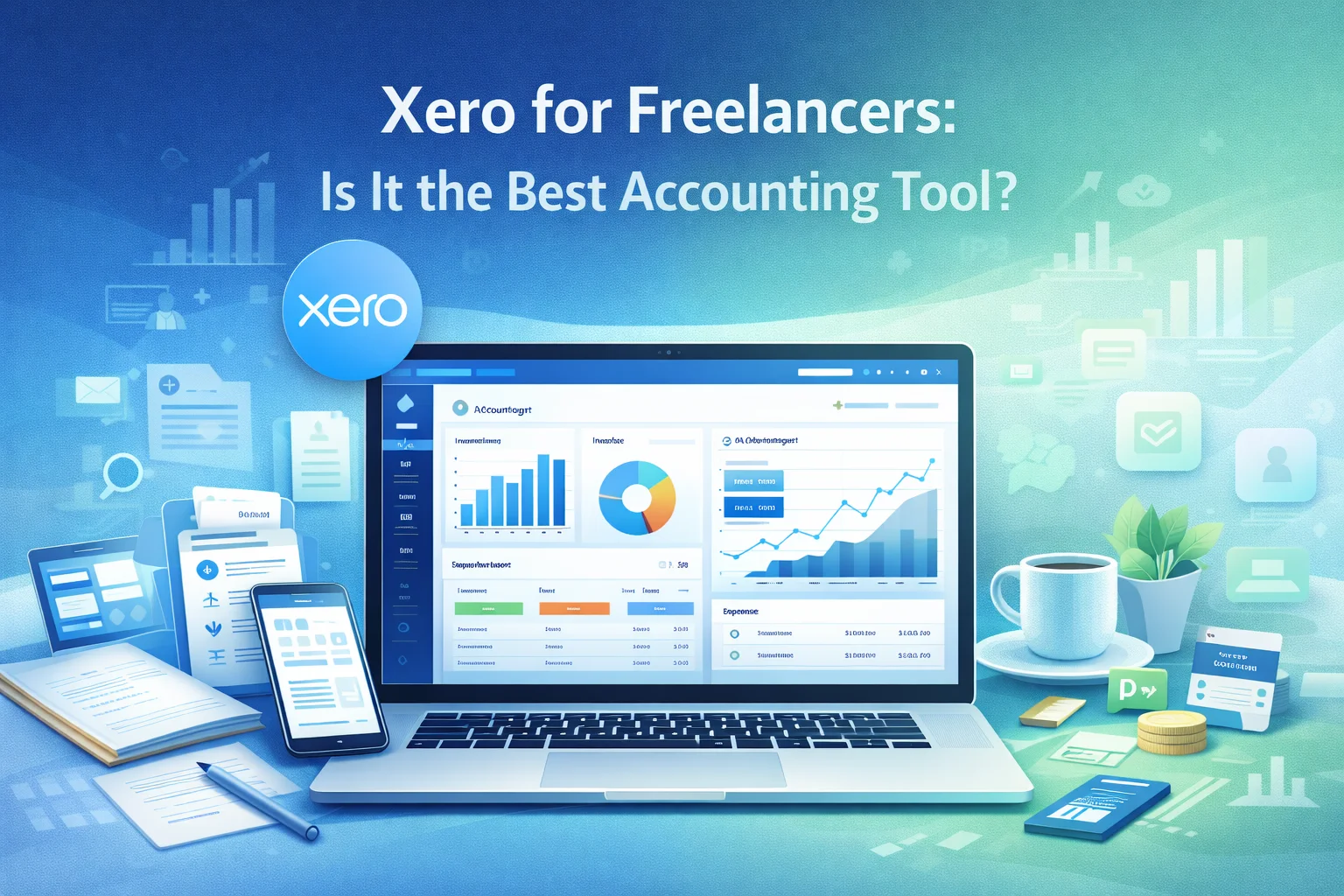
4. Real‑Time Dashboard
Xero’s dashboard gives an instant overview of:
- Accounts payable & receivable
- Bank balances
- Upcoming invoices
- Cash flow overview
This helps freelancers make data‑driven decisions without digging through spreadsheets.
5. Multi‑Currency Support
Freelancers working with international clients benefit from Xero’s multi‑currency features. It tracks transactions in different currencies and automatically updates exchange rates — useful for global invoicing.
6. Collaboration with Advisors
Xero allows unlimited users at no extra cost — even your accountant — so you can grant access to advisors without paying extra fees.
Pricing Overview
Freelancers often operate on tight budgets, so pricing matters.
| Plan | Monthly Price | Best For |
|---|---|---|
| Early | ~$20 | Solo freelancers with basic needs |
| Growing | ~$30 | Freelancers with multiple clients |
| Established | ~$60 | Freelancers with more complex finances |
Note: Prices may vary by region and time — always check the official Xero pricing page.
Is Xero Affordable for Freelancers?
- The Early plan may be enough for new freelancers.
- Growing and Established plans add features like multi‑currency and stronger reporting.
- Unlimited users on all plans make Xero cost‑effective for collaboration.
Xero vs Freelance Needs: A Feature Fit
Let’s assess how well Xero’s capabilities align with freelancer workflows:
| Freelancer Requirement | Xero Capability | Rating |
|---|---|---|
| Invoicing | Excellent | ⭐⭐⭐⭐ |
| Expense Tracking | Strong | ⭐⭐⭐⭐ |
| Bank Reconciliation | Excellent | ⭐⭐⭐⭐ |
| Taxes | Good | ⭐⭐⭐⭐ |
| Time Tracking | Limited (third‑party apps available) | ⭐⭐⭐ |
| Project Profitability | Moderate (requires add‑on) | ⭐⭐⭐ |
Conclusion: Xero covers core accounting needs exceptionally well. Time tracking and project profitability are handled better through integrations.
Real‑Life Freelance Scenarios
Scenario 1: Freelance Designer
A designer works with 10 monthly clients across borders. Xero’s:
- Multi‑currency support
- Recurring invoices
- Online payment integrations
Help them handle international payments and manage cash flow effectively.
Scenario 2: Freelance Writer
A writer bills multiple clients using variable rates. Xero’s automated invoicing and reminders significantly reduce time spent sending late notices and managing payments.
Scenario 3: Freelance Consultant
Projects have varied billing structures (hourly, retainer, milestones). Xero’s integration with time tracking tools like Harvest or Toggl provides detailed billable hours and connects seamlessly to invoices.
Xero Integrations: Expanding Freelancer Capabilities
Xero integrates with over 1,000 apps, including:
- Stripe & PayPal — for online payments
- Shopify & WooCommerce — for ecommerce freelancers
- Hubdoc — for automated document syncing
- Toggl & Harvest — for time tracking
- Gusto — for payroll (if you hire help)
Integrations expand Xero’s capabilities beyond accounting and make it suitable for various freelance workflows.
Xero Pros and Cons for Freelancers
Pros
- User‑friendly interface
- Strong automation and bank feeds
- Unlimited users at no extra cost
- Real‑time dashboard and reporting
- Multi‑currency support
- Strong integration ecosystem
Cons
- No built‑in time tracking (needs integrations)
- Project profitability tools are basic
- Learning curve for complete beginners
Comparison with Other Freelance Accounting Tools
Xero vs QuickBooks Online
| Feature | Xero | QuickBooks Online |
|---|---|---|
| Ease of Use | Moderate | Very Easy |
| Bank Reconciliation | Strong | Strong |
| Invoicing | Excellent | Excellent |
| Time Tracking | Add‑ons | Built‑in |
| Users | Unlimited | Limited based on plan |
| Multi‑Currency | Yes | Yes (higher plans) |
Verdict: QuickBooks Online is easier for beginners, but Xero’s unlimited users and ecosystem make it more scalable.
Xero vs FreshBooks
| Feature | Xero | FreshBooks |
|---|---|---|
| Invoicing | Excellent | Excellent |
| Time Tracking | Add‑ons | Built‑in |
| Reporting | Advanced | Basic |
| Automation | Strong | Moderate |
| Multi‑Currency | Yes | Limited |
Verdict: FreshBooks excels at simplicity and built‑in time tracking, but Xero offers more advanced financial management.
Is Xero the Best Accounting Tool for Freelancers?
So, is Xero the best choice for freelancers in 2026?
The answer depends on your needs:
Choose Xero if:
✔ You work with multiple clients
✔ You need automation (bank feeds, reconciliation)
✔ You want real‑time financial dashboards
✔ You collaborate with accountants often
✔ You work internationally (multi‑currency)
Consider Alternatives if:
❌ You want built‑in time tracking
❌ You prefer the simplest possible interface
❌ You have very basic financial needs
Overall Verdict:
For most freelancers — especially those with multiple clients, recurring billing, or international payments — Xero is one of the best accounting tools available in 2026. Its automation, reporting, and integration ecosystem make it a powerful platform for long‑term growth, professionalism, and financial clarity.
Conclusion
Freelancing is more than doing great work — it’s managing your business finances effectively. Xero provides a professional, flexible, and scalable solution that helps freelancers automate bookkeeping, save time, reduce errors, and make smarter financial decisions.
While Xero isn’t perfect for every single freelance scenario, it offers a comprehensive set of features that cover most accounting needs and help freelancers focus on their craft, not their spreadsheets.
If you want a tool that grows with your freelance business and supports collaboration with accountants, scalable integrations, and global invoicing — Xero is one of the best accounting tools for freelancers in 2026.
FAQ’s
1. Is Xero good for freelancers?
Yes, Xero accounting software is a strong option for freelancers because it offers automated invoicing, bank reconciliation, expense tracking, and real-time financial reports. These features help freelancers manage their finances efficiently without needing advanced accounting knowledge.
2. How much does Xero cost for freelancers?
Pricing for Xero accounting software typically starts with a basic plan suitable for solo freelancers and increases for plans that include advanced features like unlimited invoicing and multi-currency support. The cost varies by region but generally ranges from entry-level to premium plans for growing businesses.
3. Can freelancers send invoices using Xero?
Yes, freelancers can easily create, customize, and send professional invoices through Xero accounting software. The platform also allows automated payment reminders and online payment integrations, helping freelancers get paid faster.
4. Does Xero help freelancers track expenses?
Absolutely. Xero accounting software allows freelancers to track expenses, upload receipts, categorize transactions, and link expenses to projects or clients. This makes it easier to manage budgets and prepare for tax season.
5. Is Xero better than other accounting tools for freelancers?
Whether Xero accounting software is better depends on your needs. It offers strong automation, integrations, and reporting features. However, some freelancers may prefer alternatives like QuickBooks Online or FreshBooks if they want built-in time tracking or simpler workflows.